
Common area cleaning for lobbies, halls and amenity rooms
Common area cleaning covers the spaces every resident or tenant in a building shares: the lobby, the corridors, the mailroom, shared restrooms and amenity rooms. It is arranged by whoever runs the building, a property manager, a condo or homeowners association, or an office building’s owner, and it stops at each unit’s door. Every building is quoted after a walkthrough.
- Lobbies, corridors, mailrooms and amenity rooms
- Condo, apartment and office buildings
- Never inside a tenant’s unit

Who arranges common area cleaning
Property managers
Running an apartment community or a mixed-use building, with one budget and one person approving the scope.
Condo associations and HOAs
A board or its manager arranging the shared spaces residents pay for through their dues.
Office building owners
The lobby, corridors and shared restrooms of a multi-tenant building, separate from each tenant’s own suite.
Lobby, corridors and the other spaces a program can cover
These are the shared rooms a common-area program is built from. The walkthrough decides which ones your building has, how much use each gets and how often each one needs a visit.
- Lobby and entry
- Entry glass from the inside, the front desk counter, seating, mats and the floor.
- Corridors
- Floors vacuumed or mopped, handrails, light switches and door hardware wiped.
- Mailroom
- Counters, the faces of the mailboxes, the package shelf surfaces and the floor.
- Shared restrooms
- Fixtures, mirrors, partitions, floors and trash cans; paper goods put out if agreed.
- Amenity rooms
- Clubroom or lounge counters, sinks and tables, a shared kitchen’s surfaces, a fitness room’s floor and benches.
Where the scope stops
- Inside any resident’s or tenant’s unit or suite
- Pools, pool decks and outdoor grills
- Parking garages, loading docks and exterior walkways
- Exterior windows and any work at height
- Pressure washing, carpet shampooing and floor stripping or waxing
- Trash chutes, compactors and hauling bulk items
- Repairs, painting and pest or mold problems
Working inside an occupied building
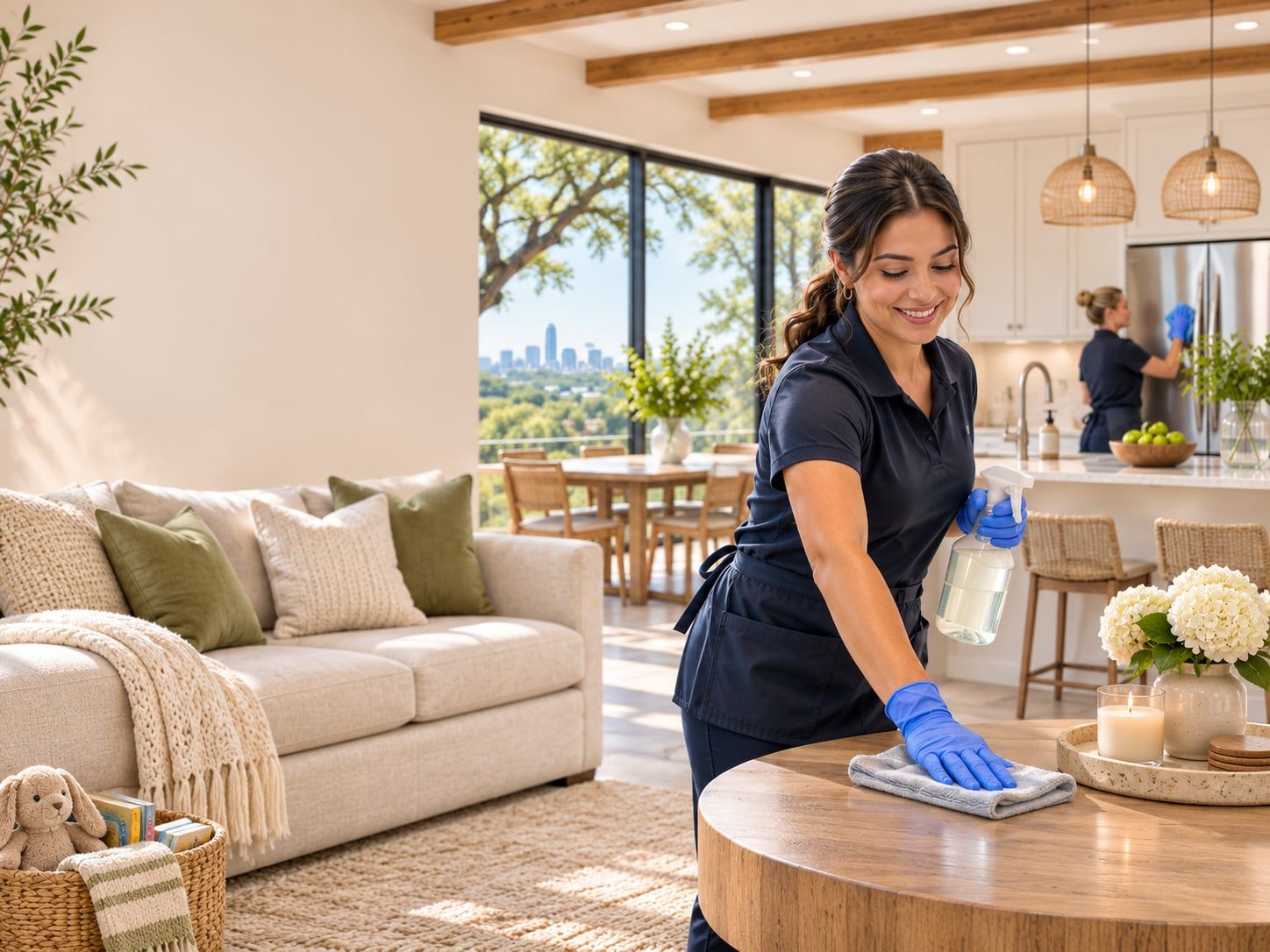
Residents and tenants use the shared spaces while the crew works, so the scope settles how the visit stays out of their way: which entrance the crew uses, where it parks, where the cleaning cart waits and how a wet floor is marked.
A tower downtown or near Lady Bird Lake may add a front desk sign-in, a freight elevator reservation or garage-level access rules. Garden-style apartments in South or East Austin may mean several buildings, stairs instead of elevators and a mailroom in a separate clubhouse. Every building’s rules differ, so send yours before the first visit.
Every cleaner is background-checked, bonded and insured.
How a common-area program is quoted
Common-area programs are quoted after a walkthrough, not from a published table. The quote is built from the shared floor area, the number of restrooms and amenity rooms, the flooring and how often each space is visited; more frequent visits cost less each. Prices are before tax. The program is not booked online and does not start the same day. See how commercial rates work
Start here
Get a free quote
Send the building’s address, the number of floors and units, the shared rooms and the contact who approves the scope. We schedule a walkthrough and send a written scope and price.
Get a Free QuoteIf something on the checklist was missed, tell us within 24 hours and we come back to re-clean that area at no extra cost.
Cleaning an office suite inside the building instead? See office cleaning. A ground-floor shop is covered under retail cleaning. All three sit on the commercial overview, and the building’s address is confirmed first; the service areas page covers how that check works.
Questions from building managers and boards
A resident asked whether your crew can clean their unit while it is in the building. Can it?
Not as part of the building’s program. The common-area scope stops at each unit’s front door. A resident who wants their own home cleaned books it separately, as an apartment or condo cleaning, and pays for it themselves.
Our condo association board changes every year. Who should the program answer to?
One named contact, usually the property manager or a board member chosen for the role. The scope records that person, who can approve changes and who receives the reports. When the board changes, tell us the new contact so instructions keep coming from one place.
Can the fitness room be included?
Its floor, benches, mirrors and the surfaces people touch can be part of the program. Servicing or repairing the equipment is not. The walkthrough is the place to agree which machines can be wiped and which the building’s equipment vendor handles.
Our building has 40 units on four floors. Is that too big to quote from photos?
Common-area programs are quoted after a walkthrough, whatever the size, because traffic, flooring and the number of shared rooms vary so much between buildings. Photos and floor plans help us prepare for the walkthrough, but the price follows the visit.
Common area cleaning across Austin, from the southwest office outward
The office is in Southwest Austin (78749). We clean in Southwest Austin, Oak Hill, Circle C Ranch and Sunset Valley; in South Austin, Manchaca, Buda and Kyle; in Downtown Austin, Central Austin, West Lake Hills and Rollingwood; and in East Austin and Southeast Austin. North-central addresses are checked one by one. The full property address, not the ZIP code, decides whether a visit can be scheduled and which days are open.
Questions people ask
Next step
Arrange a building walkthrough
Tell us the address, the floors and units, the shared rooms and who approves the scope. The walkthrough with your contact comes first, and the scope and price follow it.
Call (737) 237-7118 Office open Mon–Fri, 9 AM–6 PM · Contact Hygiene Maids Austin